
Printing and graphic arts
Printing and graphic arts is a manufacturing industry. The equipment is industrial, the production environment is a factory floor, and the skills required to operate it properly — press operation, prepress workflow, colour management, substrate handling, finishing — take time and proper training to develop.
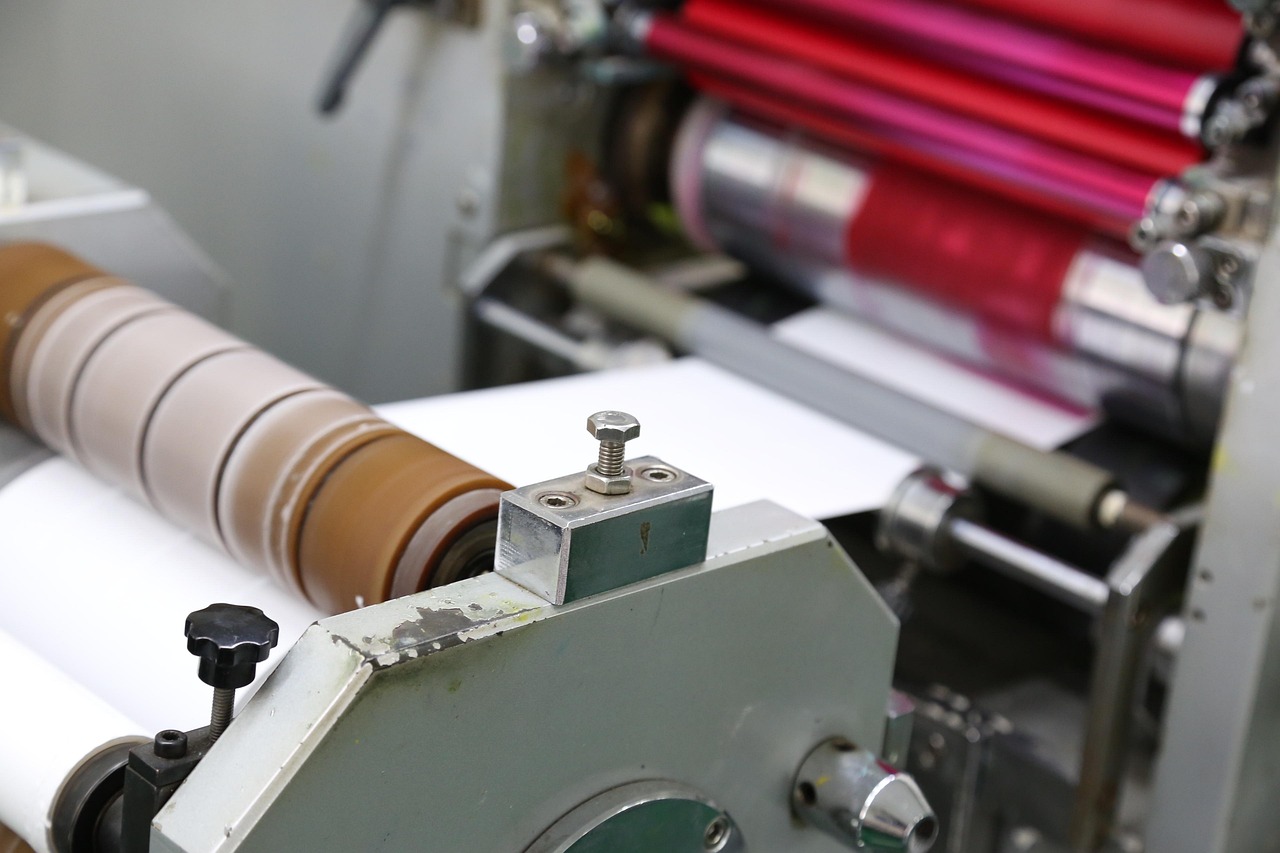
The industry spans letterpress, lithographic, flexographic, gravure, digital print, screen printing, and wide format. It produces commercial print, packaging, labels, signage, and everything in between. The people who work in it are print machinists — they set up and operate presses, prepare material, monitor and run equipment, and solve production problems as they arise.
Every label on every product on every shelf in every supermarket in the country was printed by someone. Every package, every brochure, every billboard, every book cover. Print is not a peripheral industry — it is woven into the fabric of manufacturing, retail, food and beverage, pharmaceutical, construction, and every other sector that needs to put information or branding onto a physical surface. Which is all of them.
The modern print industry is technical, equipment-intensive, and increasingly specialised. Digital disruption changed the mix — it consolidated some sectors and grew others — but it did not replace the need for skilled operators who understand the relationship between ink, substrate, press, and finished product. That understanding cannot be acquired by reading about it. It comes from time on a machine, in a production environment, with someone who knows the difference between a good job and a bad one.
These are trade skills. Learned on equipment. In a real production environment. Under the supervision of someone who has been doing it properly for years.
The print industry employs people across a wide range of specialist roles — and the career pathway is clearer than most people expect.
Entry level positions in prepress, press operation, and finishing lead directly to specialist operator roles. Offset printer. Screen printer. Digital print operator. Flexographic printer. Wide format operator. Each of these is a distinct specialisation with its own technical depth, its own equipment, and its own career ceiling — which is higher than the industry's reputation suggests.
From specialist operator, the pathway moves into supervisory roles — leading a shift, managing a press room, coordinating production — and from there into production management and technical direction. These are well-compensated roles in an industry that has been quietly consolidating for two decades. The operators who stayed and developed genuine depth are the ones getting the calls.
For candidates already in the industry, the qualification pathway is not about learning what you don't know. It's about formally recognising what you do. RPL is available at both qualification levels. If you have been operating presses or working in a print production environment for any length of time, you may already be closer to a formal qualification than you think. The assessment process is honest — we will tell you where you stand before you commit to anything.
For new entrants, the pathway from Certificate II to Certificate III provides the structured foundation the industry requires. You start with the fundamentals — equipment familiarisation, materials handling, production processes, workplace safety — and build from there into the specialist skills your chosen area of the industry demands.
Print training with Specialised is delivered in a working print production environment. Not a simulation. Not a training room with pictures of presses on the wall. A real facility, with real equipment, producing real work.
Before training begins, we identify and approve a workplace mentor — an experienced print industry professional already working in your environment. Their job is to supervise your practical work, monitor your development against the competency requirements, and sign off on what you can demonstrate. We don't just hand you a workbook and wish you luck. We assess your mentor, we brief them thoroughly on what is required, and we support them throughout your training. The standard they hold you to is the national industry standard — not something we made up, and not something that can be gamed.
Your progress is documented against the national competency standard. Every task demonstrated, every skill signed off, every piece of evidence gathered — recorded in a structured format that shows exactly what you can do, on real equipment, under real production conditions. When you complete, the credential you hold means something because the evidence behind it is real.
For candidates already working in the industry, RPL is available at both qualification levels. The RPL process assesses your existing skills and knowledge against the qualification requirements and tells you honestly what you already hold and what, if anything, you still need to demonstrate. Many experienced operators are surprised by how close they already are.
Call us before you assume anything. We will tell you where you stand.
| CODE | QUALIFICATION |
| ICP20120 | Certificate II in Printing and Graphic Arts |
| ICP31220 | Certificate III in Printing and Graphic Arts |
This isn't everything we can deliver in this space. Call us on *1300 4K LIFT* and we'll find the right pathway for your situation.

Ready to start?
1300 4K LIFT (1300 45 5438) — or send an enquiry. We pick up. We answer. We get you started.
Enrol Online! Send an Enquiry Call Now